Hair Loss Treatment for Women
For many women, hair is much more than just a part of their appearance. It often reflects confidence, personality, and even how they feel about themselves. That’s why noticing extra strands on your pillow, in the shower, or caught in your hairbrush can feel unsettling. While it’s perfectly normal to lose a certain amount of hair every day, ongoing shedding or noticeable thinning may be your body’s way of signaling that something needs attention.
The good news is that experiencing hair loss doesn’t automatically mean you’ll continue losing hair forever. Thanks to years of scientific research, we now understand far more about what affects hair health and what can be done to support stronger, healthier strands. Instead of chasing unrealistic promises or overnight solutions, the most effective approach is to understand the root causes, care for your scalp, nourish your body, and choose a reliable hair loss treatment that fits into your daily routine.
If you’ve been searching for a trustworthy hair loss treatment for women, you’re certainly not alone. Millions of women experience some form of hair thinning at different stages of life. Whether the cause is stress, hormonal changes, genetics, or nutritional deficiencies, there are practical steps you can take to support healthy hair growth and improve the overall condition of your hair over time.
In this guide, we’ll look at the most common reasons women experience hair loss, explain how healthy hair grows, discuss everyday habits that can make a difference, and explore how nutritional supplements such as Locerin may help support long-term hair wellness.
Understanding Female Hair Loss
Hair is constantly renewing itself through a natural growth cycle. Every single strand goes through three main stages. First comes the active growth phase, followed by a resting period, and finally the shedding stage before a new hair begins growing from the same follicle.
Under normal circumstances, these stages stay in balance, allowing your hair to maintain its thickness and healthy appearance. The problem begins when that balance is disrupted. When more hairs enter the shedding phase than the growth phase, you may start noticing thinner areas, reduced volume, or slower-growing hair.
This change rarely happens overnight. For many women, it develops gradually over several months, making it easy to overlook the early signs. By the time thinning becomes clearly visible, the underlying process may have already been progressing for quite some time.
Some of the most common signs include:
- More hair falling out while washing or brushing
- A wider center part than before
- Hair that feels less full or voluminous
- Finer strands with less strength
- Slower hair growth
- Reduced density around the temples
- The early appearance of a receding hairline
- Increased visibility of the scalp under bright light
Seeing these changes can understandably be worrying, but they don’t always point to permanent hair loss. In many cases, identifying the cause early and following a consistent female hair loss treatment routine can help improve hair quality and support healthier-looking growth.
Why Does Hair Become Thinner?
Hair thinning is usually the result of several factors working together rather than a single problem. Understanding these contributing factors is one of the first steps toward choosing the right hair treatment for hair loss.
Hormonal Changes
Hormones have a major influence on the condition of your hair. Throughout a woman’s life, natural hormonal shifts can temporarily or permanently affect the hair growth cycle.
Pregnancy, childbirth, menopause, thyroid disorders, and conditions such as polycystic ovary syndrome (PCOS) may all contribute to increased shedding.
Menopause is particularly common. As estrogen levels gradually decline, hair follicles may produce finer, weaker strands than before. Many women notice that their ponytail feels thinner or that their hair simply doesn’t grow as quickly as it used to.
While hormonal changes are a natural part of life, maintaining proper nutrition and following a consistent hair loss treatment for women routine may help support healthier hair during these transitions.
Stress Can Affect More Than Your Mood
Stress doesn’t only impact your mental well-being. It can also interrupt the normal hair growth cycle.
A period of intense emotional or physical stress may trigger a condition known as telogen effluvium, causing a larger number of hair follicles to enter the resting phase at the same time. Interestingly, the increased shedding often doesn’t appear immediately. Many women first notice excessive hair loss two or three months after the stressful event has passed.
The encouraging news is that stress-related hair loss is often temporary. Once the body begins to recover and stress levels improve, healthy hair growth may gradually return. Supporting your body with balanced nutrition, proper sleep, and an effective hair treatment for hair loss may help during the recovery process.
Nutrition Plays a Bigger Role Than Many People Realize
Hair is made primarily of keratin, a protein that requires a steady supply of nutrients to be produced efficiently.
Without enough essential vitamins and minerals, hair follicles simply cannot perform at their best.
Some of the nutrients most commonly linked to healthy hair include:
- Iron
- Biotin
- Zinc
- Vitamin D
- Vitamin B12
- Protein
Even a mild deficiency may contribute to slower growth, weaker strands, or increased shedding. This is one reason many specialists emphasize that healthy hair begins from within. A balanced diet combined with the right nutritional support can become an important part of any successful hair loss treatment plan.
Genetics Also Matter
Sometimes, the answer lies in your family history.
If close relatives have experienced gradual hair thinning, genetics may also influence your own hair density. Female pattern hair loss usually develops slowly and often begins with a widening hair part rather than obvious bald patches.
Although genetics cannot be changed, early care can make a meaningful difference. Starting a consistent hair thinning treatment female routine before significant thinning develops may help maintain existing hair while supporting healthier-looking strands for the future.
Why Taking Action Early Can Make a Difference
One of the biggest mistakes many women make is waiting too long before doing something about their hair loss.
It’s easy to assume that extra shedding is only temporary or that things will eventually return to normal on their own. Sometimes that happens, but not always. When thinning continues for months or even years without any attention, hair follicles can gradually become smaller and less active. Over time, producing thick, healthy strands becomes much more difficult.
This is why specialists often encourage women to pay attention to the first signs instead of waiting until large areas of thinning become visible.
Think about hair care the same way you think about skincare. Looking after your skin before wrinkles appear is usually easier than trying to reverse years of damage. Hair works in a very similar way. Supporting healthy follicles early gives them a much better chance of continuing to produce stronger, fuller hair in the future.
A consistent thinning hair women treatment routine doesn’t need to be complicated. Small daily habits, combined with proper nutrition and quality supplements, can make a meaningful difference over time.
What Healthy Hair Growth Really Depends On
People often think hair simply grows on its own, but the process is surprisingly complex. Every hair follicle is like a tiny factory that depends on many different systems inside your body working together.
For healthy hair growth to happen, your scalp needs good blood circulation so oxygen and nutrients can reach the follicles. Your body also needs enough protein to build keratin, the structural protein that gives hair its strength. Hormones help regulate the length of the growth cycle, while vitamins and minerals support the countless biological processes involved in producing healthy strands.
When even one of these factors is disrupted, your hair may begin to show the effects. Growth can slow down, strands may become finer, and shedding often becomes more noticeable.
This explains why there isn’t one universal solution that works for everyone. Hair health is influenced by your lifestyle, nutrition, genetics, hormones, age, and even daily stress levels. That’s also why modern experts increasingly recommend a well-rounded hair loss treatment for women rather than relying on just one product or one ingredient.
Supporting healthy hair usually means improving the overall environment in which your follicles function.
Everyday Habits That May Be Contributing to Hair Loss
Sometimes, it’s not a medical condition that’s causing your hair to struggle. Everyday habits can gradually weaken your hair without you even realizing it.
Making a few simple changes can often help protect the hair you already have while creating better conditions for future growth.
Excessive Heat Styling
Straighteners, curling irons, and high-powered hair dryers can all damage the outer layer of the hair shaft when used too frequently.
Although these tools don’t usually affect the follicle beneath the scalp, repeated heat exposure weakens the hair fiber, making it more prone to breakage. When strands snap before reaching their full length, hair naturally appears thinner and less healthy.
Using lower heat settings, applying a heat protectant, and allowing your hair to air dry whenever possible can help minimize unnecessary damage.
Hairstyles That Pull Too Tightly
Many popular hairstyles place constant tension on the roots.
High ponytails, tight braids, buns, and extensions may look attractive, but wearing them every day can place stress on the follicles. Over time, this repeated pulling may contribute to traction alopecia, a form of hair loss that often affects the temples and hairline first.
If you’ve noticed the beginnings of a receding hairline, giving your hair a break from tight styles may help reduce further stress on delicate follicles.
Choosing looser hairstyles and varying how you wear your hair throughout the week can make a surprising difference over the long term.
Frequent Chemical Treatments
Hair coloring, bleaching, relaxing, and perming have become part of many beauty routines. While occasional treatments are generally manageable, repeated chemical processing can gradually weaken the hair shaft.
Hair that has been damaged by chemicals tends to lose moisture more easily, becoming dry, brittle, and prone to breakage.
Healthy-looking hair isn’t only about producing new strands. It’s also about protecting the hair that’s already growing. The less damage your existing hair experiences, the fuller and thicker it will appear.
Overlooking Scalp Care
Many people spend a great deal of time choosing shampoos and conditioners but rarely think about the condition of their scalp.
In reality, healthy hair begins with healthy follicles, and healthy follicles depend on a healthy scalp.
Product buildup, excessive oil, dryness, irritation, and inflammation may all interfere with the environment where hair grows.
Keeping the scalp clean without over-washing, gently massaging it during shampooing, and avoiding harsh products can help support normal follicle function.
This is one reason why many modern female hair loss treatment approaches focus on both scalp health and internal nutritional support rather than concentrating on hair alone.
Supporting Hair Naturally Every Day
There’s no shortage of products promising instant results, but healthy hair simply doesn’t work that way.
Hair grows slowly. In most cases, it gains only about half an inch each month. That means noticeable improvements take time, consistency, and realistic expectations.
Instead of searching for quick fixes, it’s usually more effective to build daily habits that support your hair from multiple angles.
Simple lifestyle choices can have a lasting impact, including:
- Eating enough protein every day
- Maintaining healthy iron, vitamin, and mineral levels
- Drinking enough water
- Getting quality sleep each night
- Managing everyday stress
- Being gentle when brushing or styling your hair
- Limiting excessive heat exposure
- Using supplements formulated to support healthy hair growth
Individually, each habit may seem small. Together, however, they create an environment where hair follicles are better equipped to produce stronger, healthier strands.
Consistency is often the biggest factor separating temporary improvements from long-term hair wellness.
Making Locerin Part of a Long-Term Hair Care Routine
When it comes to improving hair health, there is rarely a single product that does all the work on its own. Healthy-looking hair is usually the result of many factors working together, including balanced nutrition, good scalp care, healthy daily habits, and patience.
This is where nutritional supplements can play a supportive role.
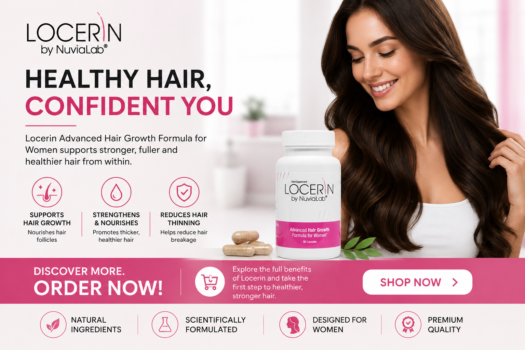
Locerin has become a popular choice among women looking for a comprehensive hair loss treatment for women because it focuses on nourishing hair from within. Rather than working only on the surface like shampoos or serums, it provides a blend of vitamins, minerals, amino acids, and carefully selected botanical ingredients designed to support the normal function of healthy hair follicles.
Hair follicles depend on a steady supply of nutrients every day. If the body doesn’t receive enough of the building blocks needed for healthy hair production, even the best external hair care routine may have limited results. Internal nutritional support helps provide those essential nutrients as part of an overall approach to hair wellness.
For women experiencing increased shedding, gradual thinning, or slower hair growth, adding a supplement to their daily routine may help support stronger, healthier-looking hair over time.
Of course, no supplement should be viewed as an overnight solution. Hair grows slowly, and every person responds differently depending on factors such as age, genetics, hormone levels, nutrition, and lifestyle. Visible improvements often require several months of consistent care, which is why setting realistic expectations is so important.
The goal isn’t simply to grow more hair as quickly as possible. It’s to create the best possible environment for healthy follicles to do what they are naturally designed to do.
Why Consistency Matters
One reason many people become disappointed with hair products is that they stop using them too soon.
Hair follows its own natural growth cycle, and those cycles cannot be rushed. Even when follicles begin receiving better nutritional support, newly growing hairs need time before they become visible.
This is why consistency is one of the most important parts of any hair treatment for hair loss plan.
Taking your supplement regularly, eating a balanced diet, staying hydrated, managing stress, and following a gentle hair care routine all work together. While none of these habits may seem dramatic on their own, the combined effect can make a meaningful difference over the long term.
Think of healthy hair as the result of daily care rather than a quick fix.
Building a Hair Wellness Routine That Lasts
Creating healthier hair doesn’t have to involve an overly complicated routine. In fact, the simplest habits are often the easiest to maintain.
A sustainable routine might include:
- Eating protein-rich meals every day
- Including foods rich in iron, zinc, and essential vitamins
- Drinking enough water throughout the day
- Getting regular, restorative sleep
- Reducing unnecessary stress whenever possible
- Protecting hair from excessive heat and harsh chemical treatments
- Caring for your scalp as carefully as you care for your hair
- Using a high-quality supplement such as Locerin consistently as part of your daily wellness routine
When these habits become part of everyday life, they help create conditions that support healthy hair regrowth and stronger-looking hair over time.
Final Thoughts
Hair loss can feel frustrating, but it’s a challenge that many women experience at some point in their lives. Whether the cause is stress, hormonal changes, genetics, aging, or nutritional deficiencies, understanding what’s happening is the first step toward making informed decisions.
There is no universal solution that works for everyone, and lasting improvements rarely happen overnight. Healthy hair requires time, patience, and a consistent routine that supports the body as well as the scalp.
Choosing the right hair loss treatment, maintaining a balanced lifestyle, and giving your hair the nutrients it needs can all contribute to healthier-looking results. Even small changes made today may help protect the strength and appearance of your hair in the months and years ahead.
For women searching for a dependable hair fall treatment for women, combining healthy daily habits with targeted nutritional support may offer a practical and realistic path toward fuller-looking hair. Products such as Locerin fit naturally into this long-term approach by helping provide the nutrients that healthy hair follicles rely on every day.
Ultimately, beautiful hair isn’t built through quick fixes or miracle claims. It’s the result of consistent care, good nutrition, and making choices that support your overall well-being. By taking a balanced approach and staying committed to your routine, you can give your hair the best opportunity to look stronger, healthier, and more vibrant with time.


Healthy hair